


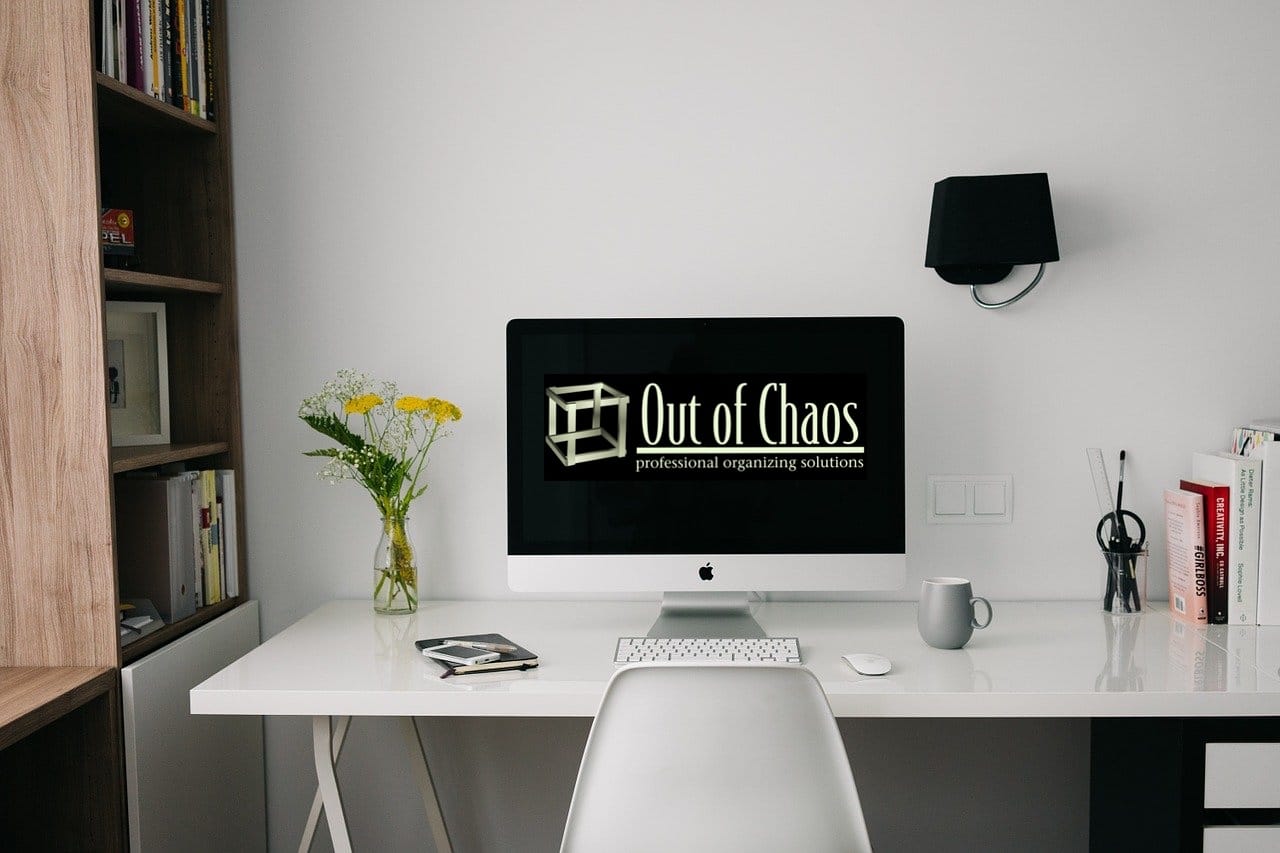
Declutter. Linda Chu, with Some Tips on Decluttering Your Email, Your Desk and Your Mind was originally published in HR Matters magazine.
1. What’s wrong with clutter?
Clutter itself is not the problem. We all have information, resources, and possessions that we accumulate for some reason or another. In the workplace there are records relating to our administrative and operational needs and information that is permanent or for reference. It can be all-consuming and never-ending.
You know something is wrong when the volume of your information is inhibiting your ability to access what you need in a timely manner. Critical also, is recognizing that the emotional stress and anxiety around your clutter may be affecting your performance and bottom-line.
2. I want to declutter my email, my desk, my mind and I don’t have the faintest clue where to start. Any tips?
You are not alone. According to an organizational study by Office Depot, a global supplier of office products and services, 61% of those surveyed claim the biggest frustration with their disorganized environment is that they can’t find what they need quickly. Even a bigger frustration is that 67% are not sure how to start or maintain their efforts.
What I suggest is an inventory-taking process. We have so much information and tasks that we don’t really know what we have or what we are dealing with.
Start by committing a consistent amount of time each day, if you can not afford the marathon organizing session. Remember that 15 minutes a day adds up to one hour and 15 minutes a week. By the end of the month that’s five hours. This may be five hours more than you have committed to over the last six months.
The key here is to just dive in. I would recommend your immediate workspace since this is your home plate, your foundation. Pick up that first piece of information or note scribbled on scrap paper. Ask yourself what you need to do with this. As you go through your piles, you will find similar action items. These can be phone calls to make, information for an upcoming project, or references to file away, etc.
Often, our piles are signs of unfinished business. Once you have grouped your actions together, you can plan your days by committing time to complete your tasks.
Email is just the electronic equivalent of our physical clutter. Organizing your electronic documents is the same as for your physical documents. Manage your email by maximizing the techniques available in your email program. For example create folders, set up rules, and manage your outstanding emails using the follow-up function.
Perform a “mind dump” by simply writing down all the tasks you think you need to do. In doing so, you are de-cluttering your mind. This means you can concentrate on committing time to your daily calendar to complete your tasks. You know from experience that you can never complete the 100 items on your to-do list in one day, so why set yourself up to fail. Instead, break down your tasks by spreading them out throughout your week or month.
3. You have talked a bit about getting your stuff together at the workplace. And let’s face it – email is a huge force to reckon with. For all the good associated with email, it has created a whole different approach to the way we work. It’s so easy to send an email off, there’s too much to get through and for some of us out there, there’s this almost psychotic need to check and reply to an email as soon as it comes in. How do you recommend dealing with this?
Email has become that phantom work that steals our time and is one of the growing reasons why our average workweek hours are increasing. Email has enhanced our ability to communicate with the world, but how to use our email has created the monster that has swallowed our time.
Taking back your time lost to email starts with getting back in control of yourself.
Turn off the ‘You’ve got mail!’ signal on your computer. Who can resist the ‘someone loves you’ urge to look at a new email the moment it is received in your mailbox? Consider turning the auto-send and receive function off and manually click on the ‘send and receive’ at strategic times in your workday.
In addition to personal shifts in how you manage your email, we need to consider corporate protocol changes. Companies may want to consider developing an email policy. What is the direction around using the ‘reply all’ command? Is there a network drive that is used for the central storage of meeting minutes, instead of sending minutes to all attendees to take up storage space in each person’s computer?
4. In your experience working with various corporate clients, where do you see the most amount of clutter and how have you advised clients to deal with it?
The most common area that I have experienced with business clients, who are working in a cluttered environment, is their inability to focus. The anxiety of wading through the piles of papers, the overload in email, the multiple priorities, not to mention balancing these and the need to get out from behind your desk and in be more in front of your clients and staff.
Keeping your desk clear gives you the ability to focus on the unexpected and to plan ahead. Identifying the decision you need to make throughout the day ensures that you are not immobilized by inaction. Creating territories in your office will give you the direction to keep on top of your daily demands. Active files, reference information, archival materials, are areas you need to set up to maintain order in your workplace. Depending on your workspace and your daily responsibilities a tickler file system (aka a BF / bring forward system) might be necessary.
5. You once said, “When things pile up we feel mentally defeated and exhausted, and the task of organizing seems impossible”. Can you elaborate on this? How would you suggest dealing with things to avoid this pile-up?
Being in a disorganized environment is like a kid in a candy store. There is so much beckoning for your attention, that one does not know where to start. The exhaustion comes from your mind bouncing from one task to another as you try to keep up with all that you have to do whirling around you, physically and electronically.
As a result of this state of overwhelm we can often procrastinate for fear of being defeated.
For some, asking for assistance is like admitting to failure. The task of delegation and learning to leverage the services of others can give you the kick-start that is missing.
Organizing your outstanding projects into work piles is essential to breaking through the mountainous piles. Once this is done, your work can be divided according to time sensitivity.
One piece of paper, one email, one project at a time. Getting started is the first hurdle. Once you dive in, momentum will carry you through.
6. Do you have a particularly memorable story about getting order out of chaos that you could share with HR Matters?
I was working with a public official in a government office. Although he had the support of an administrative assistant, there was the task of assisting him to organize his desk, including his desk drawer. As I reached inside his desk drawer to pull everything out to start taking inventory, I pulled out a handful of condoms. To his horror, he exclaimed, “Oh… I can explain those…”. As an organizer, I uncover many things through the process of developing order out of chaos. Nothing surprises me. To that end, I put on my organizing hat and proceeded with a series of questions and processes, not unlike the ones that would be asked of all my clients.
- When was the last time you used one of these?
- Did you even remember you had them in your drawer?
- If you were intending on using this item again, let’s put it aside in its own category, where another item of the same kind could be grouped.
- Once you have grouped all like items, you have a better sense of the volume you have to contain.
- Depending on the volume (in this case of condoms), one can then decide on the size of the container to use.
- Depending on the frequency of access to this item, we would find the appropriate place on your desk for ease of access.
- However, if you prefer to file your resources into a drawer, selecting a file name that is logical to you is very important.
In this case, ‘Should we file this under C for condom or P for prophylactic?”
On a side note, the reason this client had condoms in his drawer was that he was collecting samples for a sex education program in the local school district.
For more information about office organizing, contact Linda at Out of Chaos.
Image by fancycrave1 from Pixabay