


Whose Time Is It, and at What Cost?
I’ve been thinking a lot lately about how differently generations live with their belongings and what happens when those differences collide.
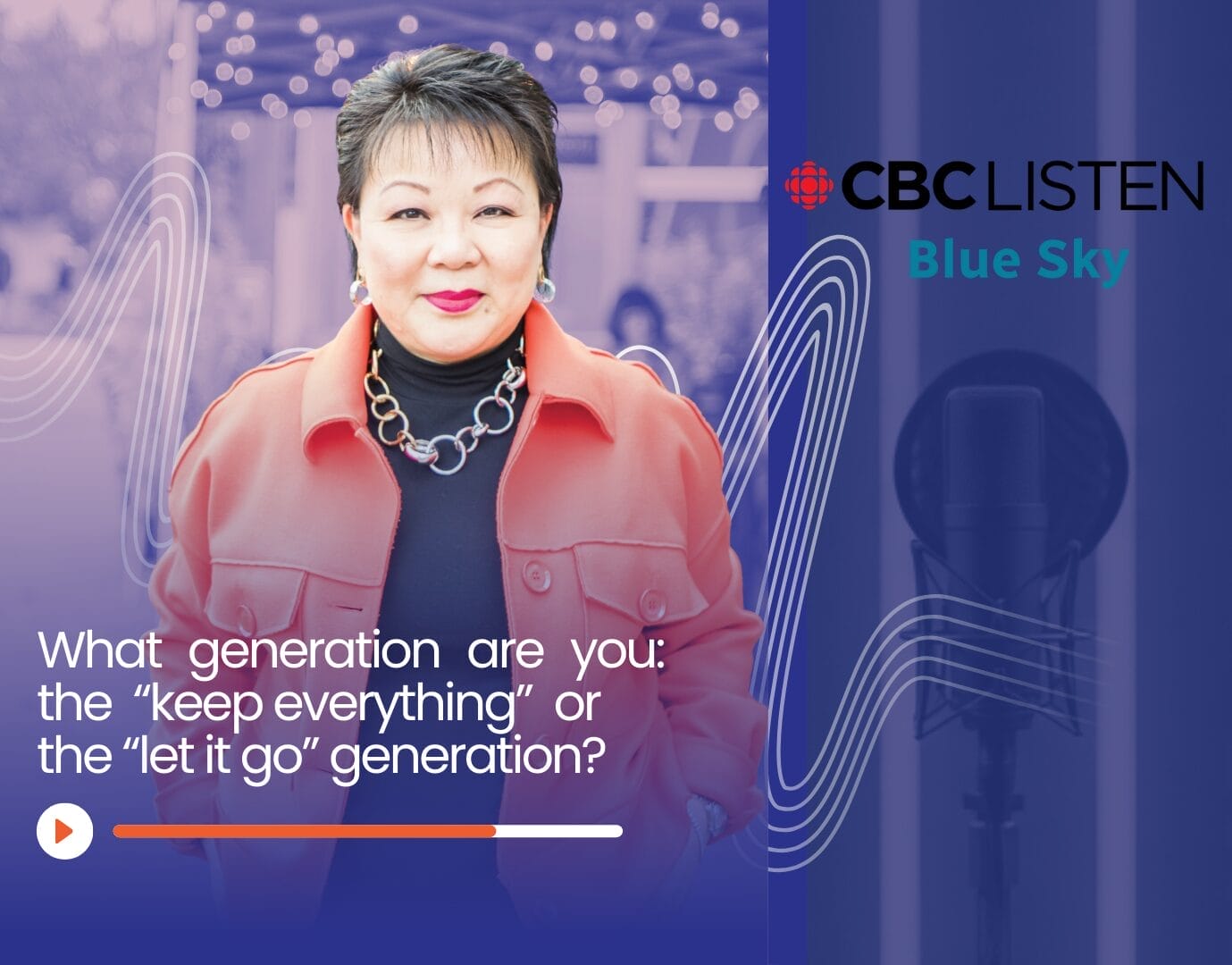
That question came up naturally during a recent conversation on CBC Blue Sky. What began as a discussion about clutter and organizing quickly expanded into something much larger: how generational values, changing lifestyles, and modern housing realities are reshaping the way families manage possessions, estates, and responsibility.
Because downsizing today is never just about creating space.
It’s about navigating generational change thoughtfully and honestly.
Generational Differences Shape How We Keep Things
Right now, many families are managing belongings shaped by multiple generations at once. Think about the Silent Generation, Baby Boomers, Gen X, Millennials, Gen Z, and now Generation Alpha.
Earlier generations were shaped by scarcity and uncertainty. Saving, repairing, and preparing weren’t preferences but survival skills. China, crystal, silverware, figurines, and collections represented care, stability, and achievement. These items were meant to last a lifetime and be passed on.
But lifestyles have changed dramatically.
Photo albums now live on phones. Calendars are digital. Rolodexes are gone. Automation and technology have reshaped daily life. Homes are smaller, more mobile, and less formal. In cities like Vancouver, a “starter home” is often a 600-square-foot one-bedroom apartment.
There simply isn’t the space or the time for china cabinets, twelve-piece dining sets, or items that require hand washing and polishing. This shift asks every generation to acknowledge present-day reality.
When “Passing It On” Becomes Complicated
During the CBC Blue Sky conversation, we talked openly about something many families are quietly discovering: the market is flooded with belongings from people who are downsizing.
China sets. Crystal. Hummel figurines. Plate collections. Tchotchkes. Salt-and-pepper shakers. Entire categories of items that once held cultural and financial value now have very little demand.
And this is only the beginning.
As more Baby Boomers downsize, the volume of household items entering resale and donation markets will continue to grow. Even people actively downsizing are often surprised to learn how little of what they saved is wanted or needed by the next generation.
This brings us back to a difficult but necessary estate-planning question: Whose time is being spent managing these belongings and at whose cost?
When items are kept “just in case,” the cost doesn’t disappear. It shows up as time spent sorting, cleaning, storing, and moving belongings. It shows up as emotional labour carried by adult children and family caregivers. It shows up financially through storage units, movers, estate cleanouts, and disposal costs. And it often shows up as conflict between family members with very different values around possessions.
In many cases, the generation that saved these items is no longer the one carrying the burden. Responsibility quietly transfers to the next generation and often during already difficult transitions like illness, death, divorce, or downsizing.
Why People Reach Out During Life Transitions
Most people don’t call Out of Chaos because they suddenly decided they want to be more organized. They call because something in their life has shifted and the systems that once worked quietly in the background no longer do.
Life has a way of moving forward without pausing for us to reorganize along the way. Homes get set up for one chapter, and then a new one begins. When that happens, the disconnect starts to show. People often reach out during moments like:
- Downsizing to a smaller home after years in the same space
- Managing an estate or clearing a home after the loss of a loved one
- Divorce, separation, or blending families and households
- Stepping into a caregiving role for a parent or partner
- Welcoming a new child and realizing the home no longer flows the same way
- Feeling constantly behind: missing appointments, searching for things, or carrying a quiet sense of overwhelm
When life changes, belongings and systems are usually the last to catch up. The stress people feel is less about “too much stuff” and more about living in a space that no longer reflects how life actually looks now. At this point, downsizing and organizing become a reset or a way to realign the home with the life being lived today.
One Thing You Need to Know
Thoughtful downsizing is about aligning what you keep with the life you’re actually living now.
That alignment starts with an honest look at your current reality. The space you live in today may be smaller or configured differently than it once was. The time and energy you have to maintain belongings may have changed. Financial considerations shift. And at some point, someone else may need to step in and manage what remains.
When downsizing is approached this way, it becomes less about loss and more about intention. The past is honoured without allowing it to become a burden for the future.
It’s also important to recognize that differences in how people relate to possessions often surface as tension within families or between partners, especially when generations collide.
My advice in these situations is consistent: start with your own space.
You can’t make someone else change their relationship with belongings. What you can do is set boundaries that allow you to function whether that means keeping shared spaces usable, clearly defining personal versus communal areas, or agreeing on simple systems that reduce daily friction.
What I Hope Listeners Took Away
We are living through a major generational shift in how possessions, housing, and legacy are understood.
Downsizing and estate planning today invite more thoughtful questions. What truly supports your life now? What are you holding onto out of habit or expectation? Who will eventually be responsible for these belongings? Are you passing down objects or responsibility?
When letting go is done intentionally, it can be an act of care. Care for yourself. Care for your family. Care for the generation that comes next.
If this conversation resonated, I invite you to listen to the full CBC Blue Sky segment here. We explore generational differences, downsizing, estate planning, and the real emotional and practical cost of holding on in a world that has changed.