


By the time January comes to an end, many people are quietly relieved.
Relieved that the pressure to improve, reset, and overhaul has loosened its grip. Relieved that the constant messaging about becoming a “better version” of themselves has softened. January can be motivating but it can also be unforgiving.
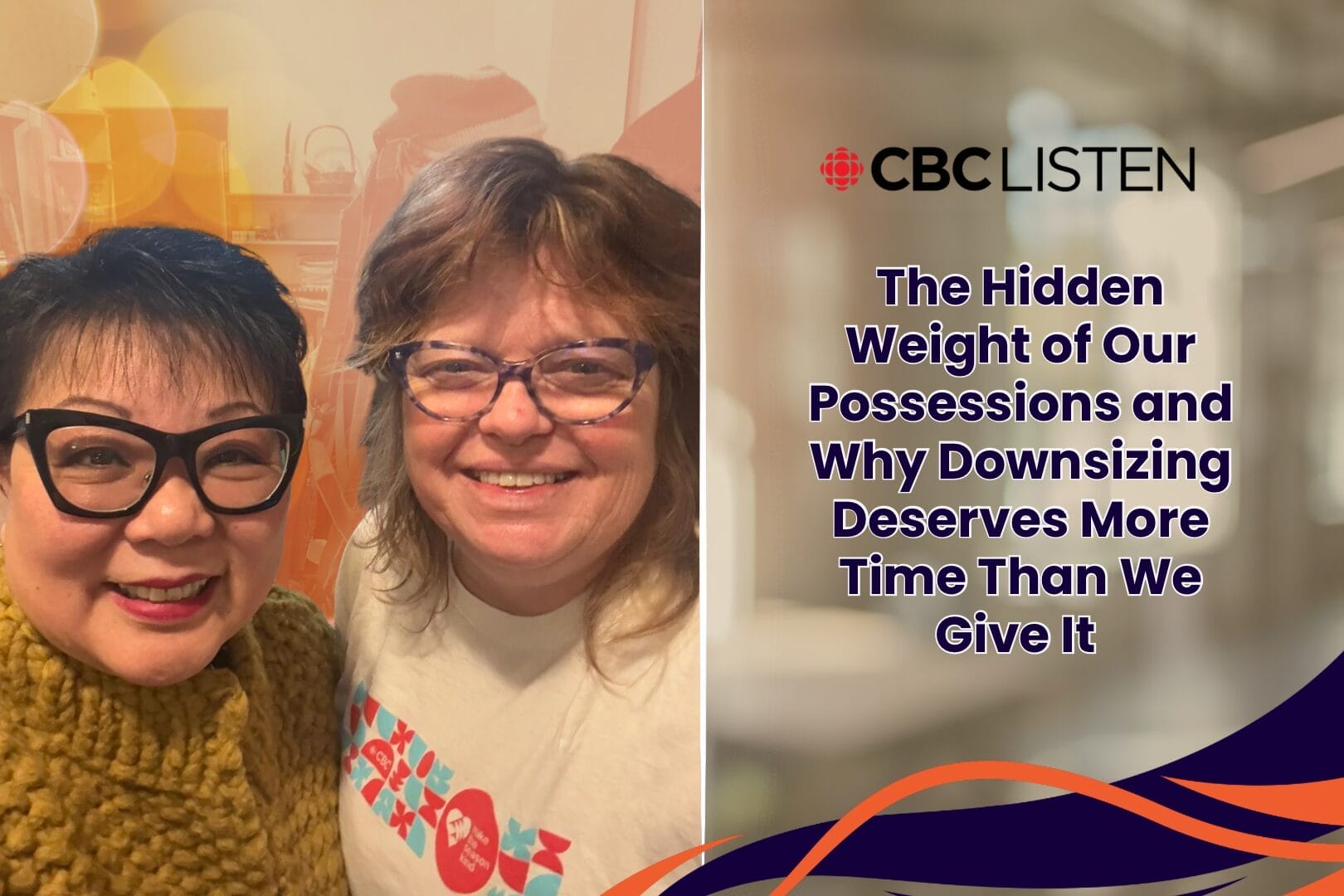
That’s why a recent CBC segment with Melody resonated so strongly. She acknowledged fatigue around January’s improve-your-life advice and offered a simple but powerful reminder: decluttering doesn’t have a best-before date. It’s something we can approach any time of year.
That framing alone changes everything.
When decluttering is tied to urgency, it often becomes performative. When it’s detached from deadlines, it becomes personal.
A Life Well Lived
Melody invited me into her studio apartment, a space she’s lived in for twelve years. She joked about whether I could tell. There were piles, boxes, and papers she’d held onto for decades. Like many people, she felt a mix of excitement and vulnerability about having a professional organizer step into her home.
What I saw immediately was something I see often: a life well lived.
Evidence of experiences collected, intentions formed.m, projects started and paused, and life continuing without pause for constant maintenance. Most clutter comes from engagement.We collect items as markers of achievements, plans, memories, and hopes. Some of those intentions are fulfilled, and others linger.
This is an important shift in perspective. When people see their homes as evidence of failure, shame creeps in. When they see their homes as evidence of life, curiosity becomes possible.
Paper, The Quiet Accumulator
One of the first areas we talked about was paper and Melody’s discovery that she’d been keeping documents for twenty years. Her reaction was embarrassment, which is incredibly common.
Paper is uniquely challenging because it accumulates invisibly. One page at a time, it asks for repeated micro-decisions. Unlike clothing or household items, paper rarely offers immediate visual relief when dealt with. As a result, it’s often deferred until it feels overwhelming.
What matters here is how we think about paper. I always encourage people to separate past decisions from future systems. Address what’s outdated, and just as importantly, create a simple rhythm moving forward. Shredding as you go reduces cognitive load and prevents future buildup.
Decluttering works best when it removes friction rather than creating more decisions.
Clothing and the Weight of Identity
From there, the conversation moved into the closet, an area that reliably holds far more emotional weight than most people expect.
Clothing is rarely just fabric. It represents identity, memory, and expectation. Outfits saved for bodies we once had or hope to have again. Special-occasion pieces tied to specific moments in time. Versions of ourselves we’re not quite ready to release.
There’s no shredder for that.
I introduced the 80/20 rule: most people wear about 20% of their wardrobe 80% of the time. That frequently worn 20% reflects your real, current life. The remaining 80% invites a gentler question: Does this still belong to who I am today?
Doing What’s Easy First
One of the most honest moments came when Melody mentioned unopened boxes she’d had since moving in twelve years ago. Some contain photo albums she still couldn’t face.
This is where many people assume they need to push through. But emotional readiness doesn’t respond well to force. When items carry grief, nostalgia, or unresolved chapters, urgency often backfires.
Overwhelm and indecision are part of the process. When that happens, do what’s easy first. Sort the obvious yeses. Let go of the clear nos. Set aside the maybes. Consistency matters more than intensity, and progress doesn’t require emotional heroics.
This approach is especially important outside of January.
Why February Matters
February is a quieter month. It doesn’t demand reinvention. It allows for honesty.
Decluttering works best when it isn’t rushed, shamed, or treated like a test of discipline. It’s most effective when approached as an ongoing relationship with your home, which shifts as your life does.
Organization systems, like life itself, should evolve. They are meant to support how you live now, not preserve how you once lived.
Not everyone has access to professional support, and that’s okay. Buddy systems, shared accountability, or trading help with a friend can make a meaningful difference. What matters most is having a second set of eyes and permission to move at a human pace.
What I Hope Listeners Took Away
The segment ended with something I believe deeply: you don’t have to live like the pages of a magazine. Organization is about personal alignment.
If you love it, you keep it.
Decluttering should support your life and reduce friction. It doesn’t need a deadline to be meaningful. So if January passed you by, let February be gentler.
Start small. Do what’s easy. Keep what you love.
A calm home is built through awareness, intention, and permission to move at a pace that actually works. When approached this way, our homes stop asking more of us than we can give. Instead, they begin to hold us “gently “ exactly where we are.
If this conversation resonated, I invite you to listen to the full CBC Radio segment with Melody Jacobson below. We talk about decluttering without deadlines, why February is a gentler place to begin, and how our homes can reflect our lives with more compassion and less pressure.