


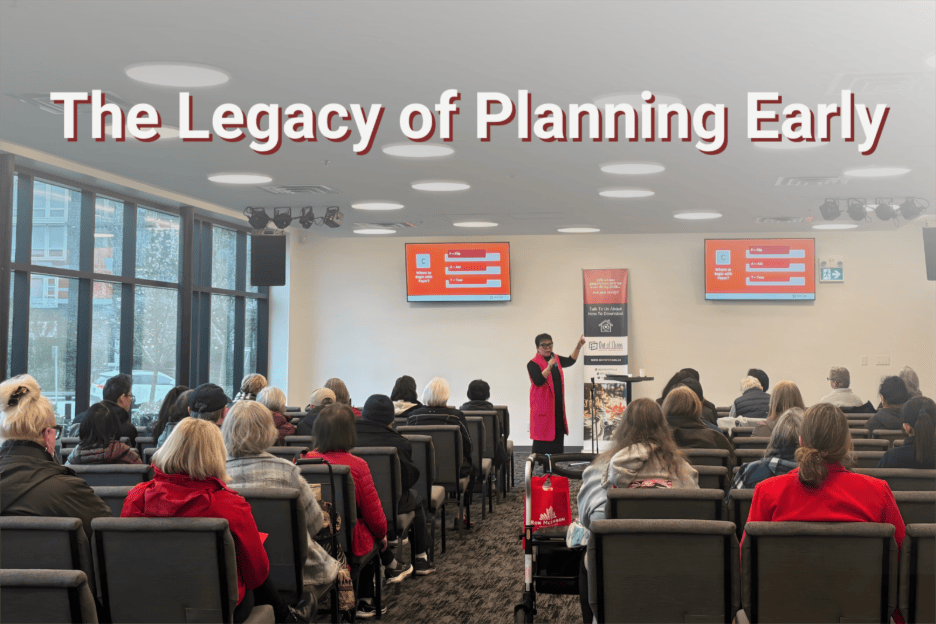
The conversation around downsizing is evolving. It’s no longer just about what to do with belongings, it’s about why it matters. More families are recognizing that planning early is one of the most meaningful steps they can take, not only for themselves, but for the people they love. Events like the Ageless™ Seniors Expo reflect this shift. They move the focus away from “stuff” and toward space, intention, and quality of life, helping people approach these decisions thoughtfully rather than reactively.

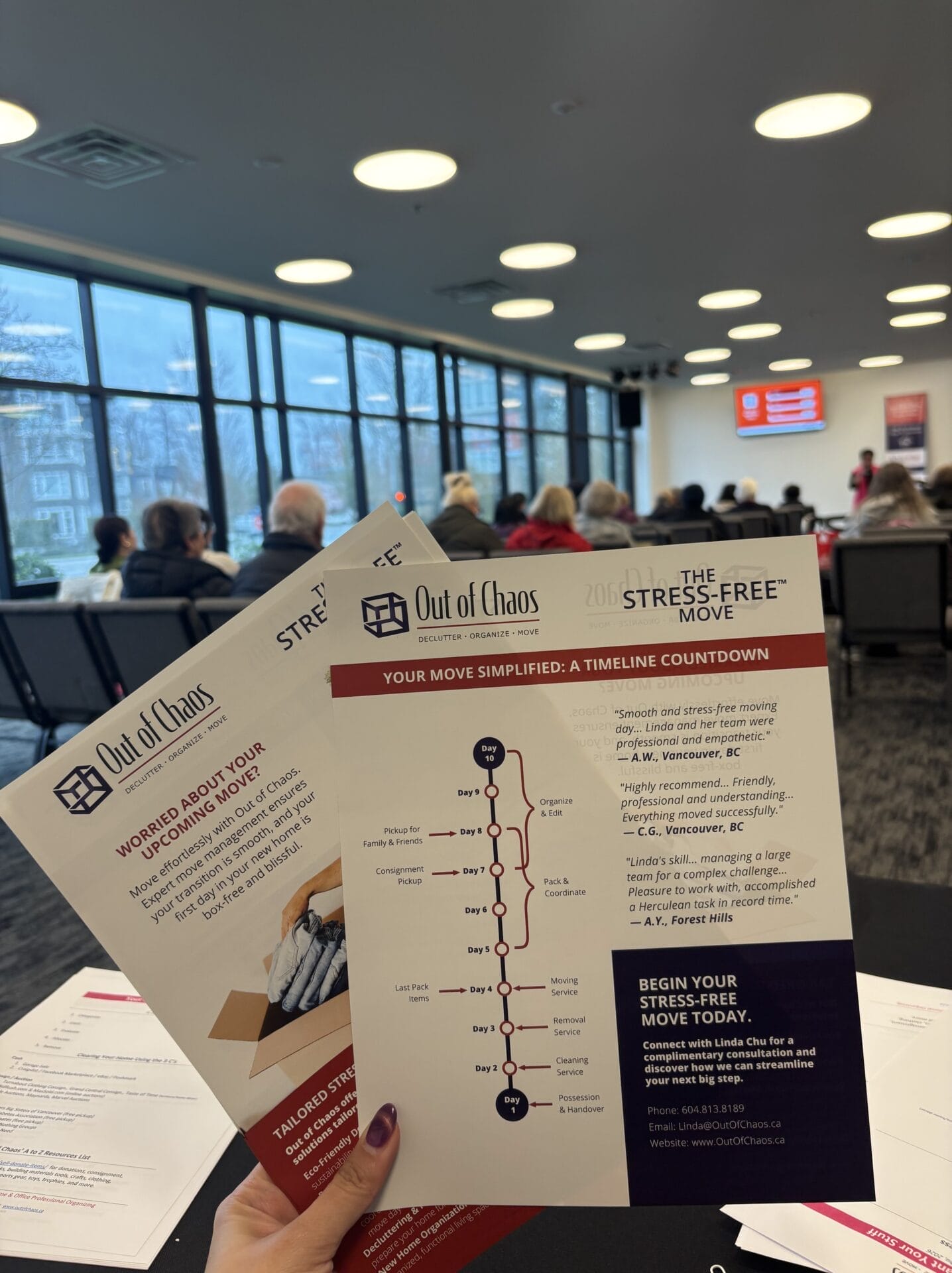
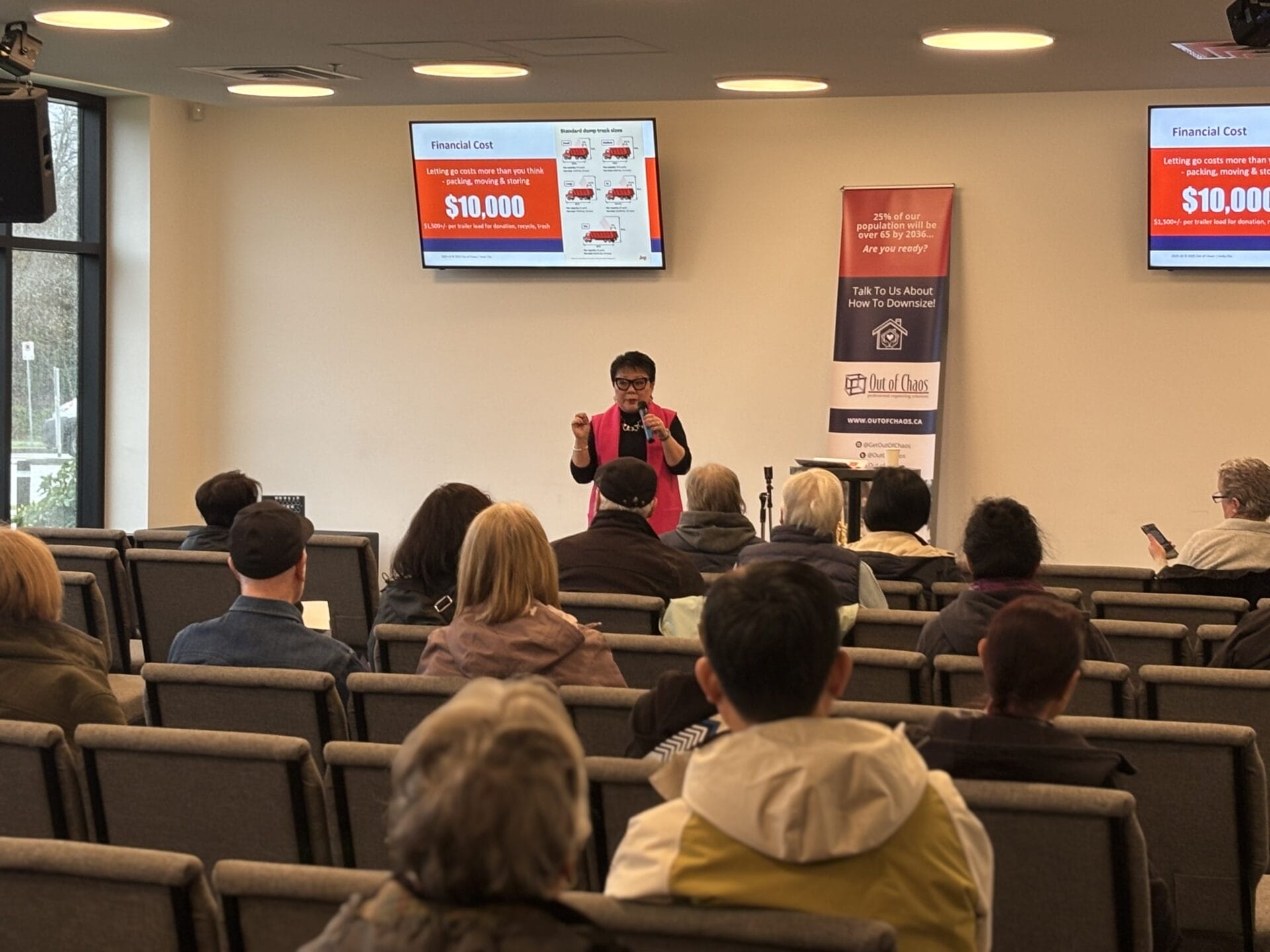
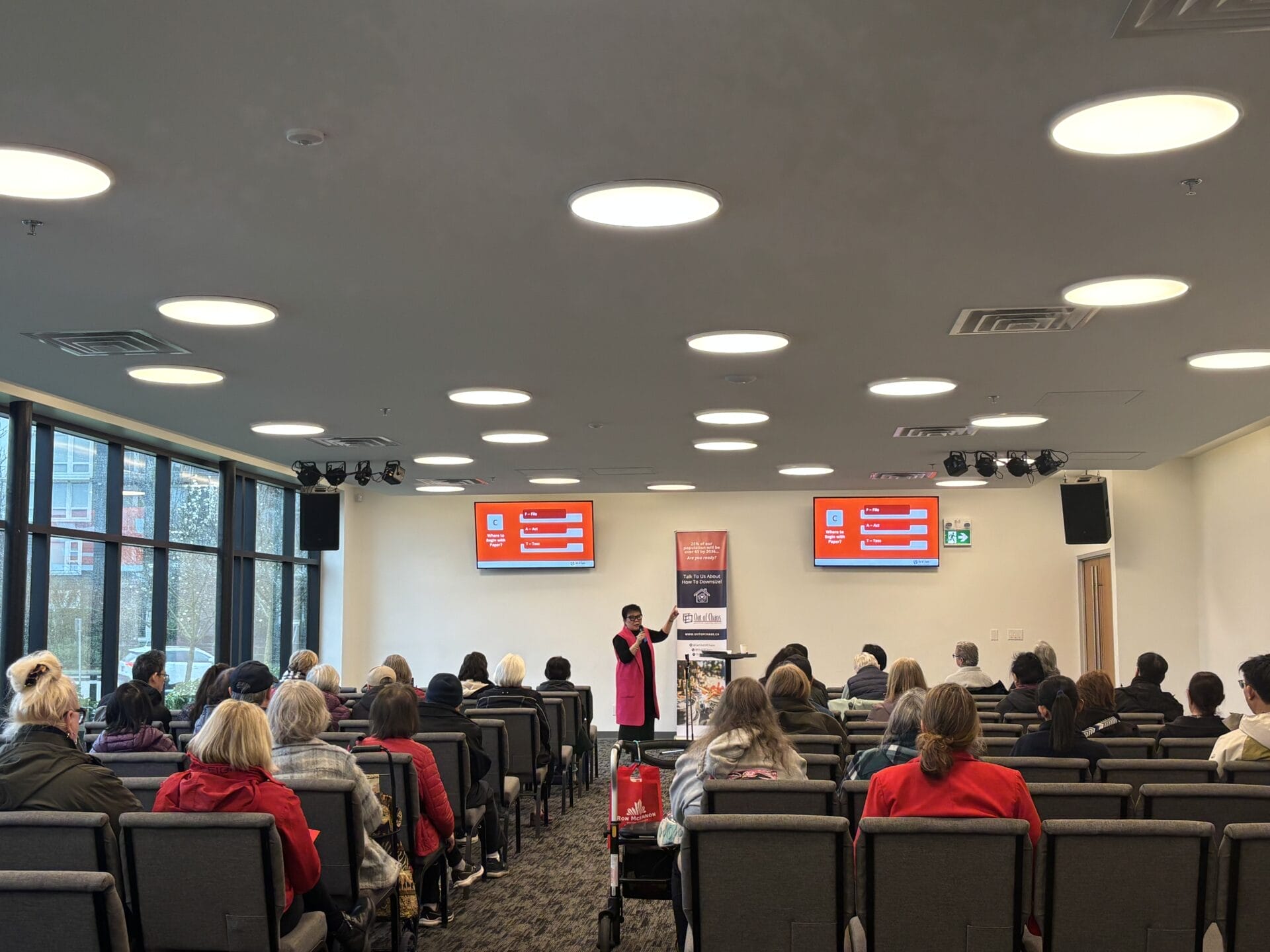
The energy at the recent Ageless™ Seniors Expo was palpable. Hosted by Glacier Media Digital (Vancouver Is Awesome) and Riverside Community Church, the event brought together over 20 vendors and a room full of engaged attendees eager to connect, learn, and share experiences.
What stood out most was the collective realization that senior transitions are deeply personal, centered on people, memories, and navigating change with the right support. For many families, the hardest part is simply starting the conversation. But as the expo made clear, planning early is about something much bigger: creating a legacy of peace.
The Two Camps of Downsizing
When it comes to estate planning and decluttering, most people fall into two groups:
- The proactive planners who have already managed their own parents’ estates and want to spare their children the same stress, cost, and emotional burden. They remember the overwhelm, the time, the cost, and the emotional strain. For them, planning early is an act of care. It’s about reducing their “footprint” so their children don’t have to carry that burden.
- The “not my problem” group who feel their belongings will simply become their children’s responsibility in the future. The mindset is simple: someone else will deal with it later.
What’s changing is a clear movement toward the first group. Having experienced the overwhelm of clearing out a loved one’s home, many are choosing to take action earlier while they still have the clarity to make intentional decisions. Because ultimately, when nothing is decided in advance, everything becomes a decision later for someone else.
Reducing the Footprint: A Gift to the Next Generation
For many, downsizing begins with a simple but powerful motivation: not wanting to leave a burden behind. In this context, decluttering is about understanding the relationship we have with our belongings and making intentional choices while we still can. By taking the time to evaluate items now, seniors can ensure their children aren’t left sorting through everything later, trying to determine what truly mattered and what was simply “stagnant stuff” collecting dust. This process helps to:
- Clarify which items truly hold meaning
- Let go of things that no longer serve a purpose
- Prevent their families from having to guess what mattered
Ultimately, reducing your footprint becomes a final and thoughtful gift. It replaces uncertainty with clarity and lightens the emotional load for the next generation.
A helpful perspective to carry through this process is that the memory doesn’t live in the item, it stays with you and your family. If something once brought joy, it has already fulfilled its purpose. Letting it go simply allows it to be useful again, in someone else’s life.
The “Good Day to Die” Philosophy
One of the more memorable ideas to come out of these conversations is the “good day to die” philosophy. At its core, it’s about being prepared in a way that makes life easier for the people you care about. Think of your home as a curated space where everything has some level of intention behind it. A simple example is labeling the back of artwork or meaningful items with the name of the person you’d like it to go to, even adding contact details if helpful.
The idea is that if something unexpected were to happen, your family wouldn’t be left trying to make decisions on your behalf. Instead, your wishes are already clear, and the path forward is much easier to follow.
This approach removes uncertainty and shifts the burden away from loved ones, turning what could be a logistical crisis into a seamless transition.
Letting Go Without Losing Meaning
One of the biggest challenges in downsizing is the guilt that comes with letting go of sentimental items. It’s easy to feel like you’re losing the memory along with the object, but in reality, the memory stays with you.
A helpful shift is to focus less on keeping everything and more on preserving what matters. Rather than holding onto entire collections or bulky items, a few simple approaches let you keep the story without keeping all the stuff:
- The Shadow Box Method: Save a small, meaningful piece of a larger item (like a scrap of fabric from a well-loved stuffed animal) and place it in a shadow box alongside a photo of the person using it. This keeps the memory tangible without keeping the entire item.
- Digitization: Convert old films, photos, and documents into digital formats, such as USB drives or cloud storage. This preserves the history without taking up physical space.
- Photography: Take a photo of a sentimental object before passing it on or discarding it. This allows you to revisit the memory anytime, without needing to store the object itself.
These strategies let you honor memories while reducing clutter, making it easier to focus on the space and life you want now.
Address Hopes and Intentions
It’s common to hold onto items not because we need them, but because they represent who we thought we would become. Unused craft supplies, sporting equipment, or hobby materials often linger, quietly reminding us of past intentions. Over time, these objects can create subtle guilt, making us feel like we’ve failed to live up to our plans or aspirations.
A practical way to handle this is to “audit” your current life. Ask yourself: Does this reflect who I am today? If the answer is no, it’s a sign that the item may no longer serve you. Letting it go frees you to focus on what truly matters now. Passing it on thoughtfully allows the item to continue its purpose elsewhere, while giving you a lighter and clearer space.
What I Hope You Take Away
One of the biggest challenges in downsizing is often not knowing where to start. Events like the Ageless™ Seniors Expo are invaluable because they help seniors shift perspective and focus on the bigger picture: the life you want to live, not just the belongings you own. The key is to look beyond the objects themselves and ask the “why” behind your space.
Here are a few guiding principles to make downsizing clearer and more intentional:
- Keep what reflects who you are today. Surround yourself only with items that truly serve your current life and identity.
- Gently pass on what no longer fits. Letting go doesn’t mean losing; it allows the item to continue being useful elsewhere.
- Prioritize space over accumulation. Ask yourself: Do I want my stuff, or do I want my space? This simple shift can reduce overwhelm.
By focusing on space, intention, and your current lifestyle, downsizing transforms from a logistical burden into a mindful, intentional process. It creates room for rejuvenation, new memories, and peace of mind for both you and your loved ones.
Starting these conversations early transforms downsizing from a logistical chore into a deliberate and purpose-driven step that reduces stress, eases emotional burden, and empowers you to shape your space and legacy.