


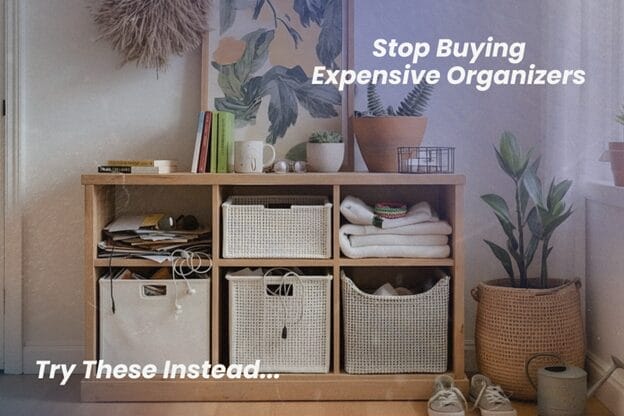
Let’s start with something most people need to hear: your home isn’t supposed to look like a magazine. Magazines don’t have backpacks on the floor, Amazon packages at the door, or that one drawer that mysteriously collects everything. Real homes do.
As a professional organizer, I don’t organize for “perfect.” I design for repeatable and low-effort systems that still work when you’re tired, busy, simply living your life, or even when downsizing from a large home to a smaller rental space.
Some of the best tools I use with clients here in Vancouver come from dollar stores. Not just because they’re affordable, but they’re very practical, flexible, and easy to maintain. They make it possible to live an upscale lifestyle on a downsized budget.
Let’s focus on real problem areas and how to fix them without overcomplicating your space.
Entryway: where clutter either stops or spreads
This space sets the tone for your entire home. When it’s organized, the rest of the house feels manageable.
- Give every person a bin (yes, even you!) Use simple white bins for gloves, scarves, toques, and pet gear. When everything belongs to everyone, it ends up belonging nowhere.
- Hooks you’ll actually use: Install adhesive hooks at eye level (not “aesthetic level”) For rentals or temporary spaces, choose Command™ adhesive strips instead of generic knockoffs to prevent wall damage. If it’s easier to drop something than hang it, you’ll drop it every time.
- Shoe rack + the heel-to-toe trick: Alternate shoes facing opposite directions to instantly save space. Place one shoe with the toe facing in and the other facing out. This small adjustment makes a big difference.
- Create a defined drop zone: Use a basket or a black silicone tray for keys, mail, and daily essentials. It transforms scattered items into an intentional and easy-to-maintain zone while protecting surfaces from scratches and water damage.
Hallway: the space everyone ignores but shouldn’t
Hallways offer hidden storage opportunities, especially when you maximize vertical space.
- Clear bins for high shelves: Use clear and stackable acrylic containers for high shelves. This allows you to see items from the floor, preventing duplicate purchases and forgotten belongings. If you can’t see it, you’ll rebuy it or forget it exists.
- Line shelves with vinyl or contact paper: Protect cabinetry from stains while refreshing older spaces. Maintenance matters more than aesthetics. When surfaces are easy to clean, they stay organized.
- Use vertical dividers for bags: DIY with a basic rack or repurpose a file sorter. To keep purses upright, insert a cut pool noodle inside each bag to help it retain its shape. No more slouchy, falling-over piles.
Guest Room or let’s be honest, the “storage room”
Most guest rooms do double or triple duty and often become “stagnant stuff” zones. Keep them flexible with smart and space-saving solutions.
- Ditch the dresser, use hanging shelves: Dollar store closet organizers create instant structure. They’re perfect for flexible storage without bulky furniture. If there’s no room for a dresser, use a sturdy hanging shelf organizer to create drawer-like storage for guests.
- Switch to uniform hangers: Slim, velvet-covered hangers prevent clothes from slipping and instantly streamline a small closet. This reduces both visual and physical bulk.
- The “Good Day to Die” Philosophy: If you’re storing heirlooms for the future, consider labeling the back of meaningful items with the intended recipient’s name and phone number. This thoughtful step simplifies future transitions for your family. Ideally, listing these items in a list that is referred to in your will is better.
Living Room: where clutter hides in plain sight
Shared spaces accumulate items quickly. The keys to maintaining calm are visibility and rotation.
- Use a lazy susan for small items: Find a bamboo or plastic Lazy Susan in the kitchen or beauty section of a dollar store. Use it for remotes, chargers, or sauces and oils if you have a bar cart or small snack zone. Rotation equals visibility and less mess.
- Upgrade to ribbed glass jars: These look chic and trendy while holding small items on open shelving. Use them for matches, snacks, or everyday essentials. They look elevated, but more importantly, they limit how much you keep.
- Try rechargeable lighting hacks: Instead of bulky lamps, use rechargeable closet lights in dark corners or bookshelves. They provide brightness without wiring or constant battery replacements.
- Keep a “clutter cup”: A simple pen holder for miscellaneous items creates a controlled mess zone. This is an essential feature in any functional home.
- Switch to stainless steel clips: Use them for pantry items or snack bags. They’re more durable and visually streamlined than plastic alternatives.
The One Habit That Makes All of This Work: The 5-Minute Reset
Consistency is what keeps spaces organized. At the end of each day, take a few minutes to clear main surfaces. To succeed long-term, you must accept the phase of life you’re in. If an item no longer fits your current lifestyle, remember that the memory doesn’t stay in the object, it stays with you. It’s okay to let it go.
Additional methods to try:
- The “Clean Slate” Rule: Remove everything from a surface before organizing and deep clean first.
- Quality Over Price: A system only works if it lasts so even at the dollar store, prioritize durable materials like stainless steel and strong, reliable adhesives.
- Luminosity Matters: Replacing a dim hallway fixture with brighter lighting can make a small rental feel instantly more upscale.
You don’t need fancy organizers, just better systems that match your real life. Because if a system only works when you have time, energy, and motivation, it’s not a good system.
Start small. Pick one area. Use what’s accessible (yes, even the dollar store and build a home that supports you on your busiest, most chaotic days, not just your best ones.
Disclosure
The recommendations shared in this article are based on professional experience and are intended to provide practical and budget-friendly solutions for everyday living. However, every home and every homeowner is unique. Preferences, budgets, and design styles vary, and what works for one person may not work for another.
You are always free to choose organizers and systems that best suit your needs, whether they come from a dollar store, a specialty retailer, or a custom designer. The goal is not to compromise on quality or aesthetics, but to create functional and sustainable solutions that align with your lifestyle.
The best organizing system is the one that works for you, supports your daily routines, simplifies your space, and makes you feel at home.